
Share:


Your business’s workload fluctuates throughout the year. Challenges like seasonal HVAC demand, losses of employees, and large temporary projects sometimes strain your team and keep customers waiting longer than ideal. In many cases, temporary HVAC labor is a great solution to keep your business running smoothly.
The best practices for temporary HVAC hiring depend partially on whether you’re doing commercial or residential projects. We dig into the details below.
The Best Times to Hire Temporary HVAC Labor
Bringing in a temporary employee can help your business deal with a change in your workload or your team, regardless of whether you’re doing residential or commercial HVAC work. For instance, you can hire a temp during:
- Seasonal demand spikes. Winter heating and summer cooling tend to bring large volumes of work all at once, and temporary labor can help you keep up with demand.
- Employee absences or turnover. A temp can fill in until your long-term employee returns or you find the right permanent hire.
- Specialized installations. You may need someone with specialized experience for projects that go beyond your team’s usual scope.
- Projects that require additional labor. If it’s just for one project, you might not want to hire a permanent employee, but you still need extra hands for the time being.
- Tight deadlines. Temps can help you get the job done faster so you’re less likely to extend past the deadline.
Temporary Labor For Commercial HVAC Projects
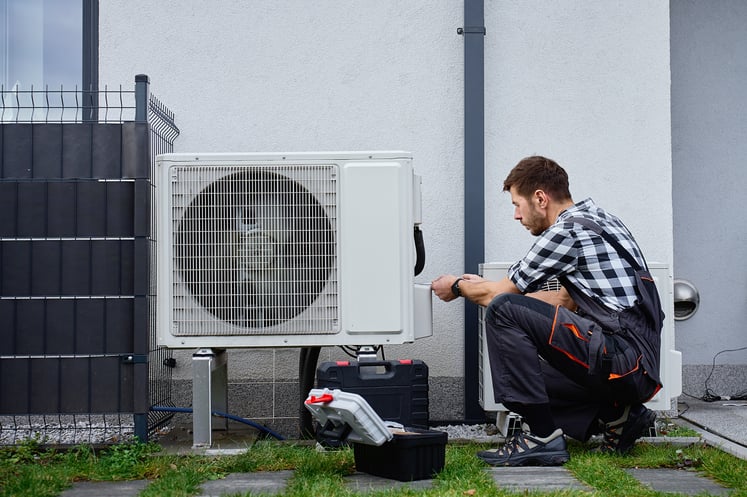
Office buildings, hospitals, industrial facilities, and schools often require a large HVAC team for a limited time. Some projects might require more people than your current team has available. Working with an HVAC staffing agency lets you scale your workforce up during the largest parts of your project.
Temporary HVAC labor can also help you prevent contractor scheduling bottlenecks, especially if you are running several projects at the same time. You can balance your crew across multiple locations, avoid pulling key employees away from critical work, and keep your clients happy as work continues uninterrupted.
Finding the Right Temp For Commercial HVAC Work
Your commercial HVAC project likely involves relatively complicated HVAC systems. Everyone on the team needs to be able to read schematics, follow complex safety protocols, and work efficiently on the HVAC systems involved. Depending on the project, you may need someone who is familiar with specific types of units or controls.
For this type of project, you need a temp who shows strong mechanical knowledge and experience. You may have to spend more to find a temp with specialized knowledge in VRF systems, rooftop unit installs, BAS, or another type of system.
Temporary Labor For Residential HVAC Projects

Residential HVAC projects tend to be smaller than commercial ones, but if you work in this sector, you likely still experience major demand spikes during peak seasons. If customer wait times are too long, you’re sure to get negative reviews and lose repeat business. Some temporary extra technicians could help you keep up with demand.
Your company may also need extra labor for months at a time during large residential projects. Temporary labor lets you staff up for development projects and then scale back when construction slows down.
Finding the Right Temp For Residential HVAC Work
Residential HVAC projects are typically smaller and need fewer people than commercial projects. That means each person on the project makes an impression on the customer, who is often the homeowner. However, the installations themselves are often basic and involve standardized systems.
For these projects, a junior-level temp could be appropriate as long as a more experienced tech will be there to supervise them. However, it’s very important for the person you hire to show good communication and customer interaction skills.
Best Practices For Hiring Temporary Labor in HVAC
You will get the most value from temporary labor if you:
- Define your temp employees’ job responsibilities. Temporary staff work best when all of your expectations are clearly outlined. A clear job description will also help your staffing agency partner find the right person for the job.
- Maintain your safety and compliance standards. Your temporary staff must meet the same requirements as long-term employees for safety and licensing.
- Make temps feel like a part of your team. Good training and an inclusive attitude, especially from your service manager or lead, can go a long way toward helping temps do their best work.
- Partner with an experienced staffing agency. An experienced firm will understand the types of field experience, certifications, and skills required for your specific project or business model.
Find a Great HVAC Technician Today
LG Resources can help you find well-qualified HVAC technicians and other skilled laborers in Utah. Our staffing agency has helped thousands of businesses like yours. Request a skilled HVAC tech from us today.

Seasonal warehouse staffing: your month-by-month Q4 playbook for Utah
It is the third week of August. The dock is quiet, your crew is caught up, and the only thing on your calendar is a budget meeting nobody is looking forward to.

Red flags to watch for when choosing a temporary staffing agency
It is 5 PM on a Thursday, and the agency you hired two weeks ago just texted to say four of the six workers they promised for tomorrow are not coming. You are the operations manager....

Are staffing agencies worth the cost? Markup, bill rates, and the real math
The invoice hits your desk on a Tuesday. Forty hours, one warehouse associate, $1,200. You know what that worker takes home because you signed off on the pay rate yourself, and it is...