
Share:


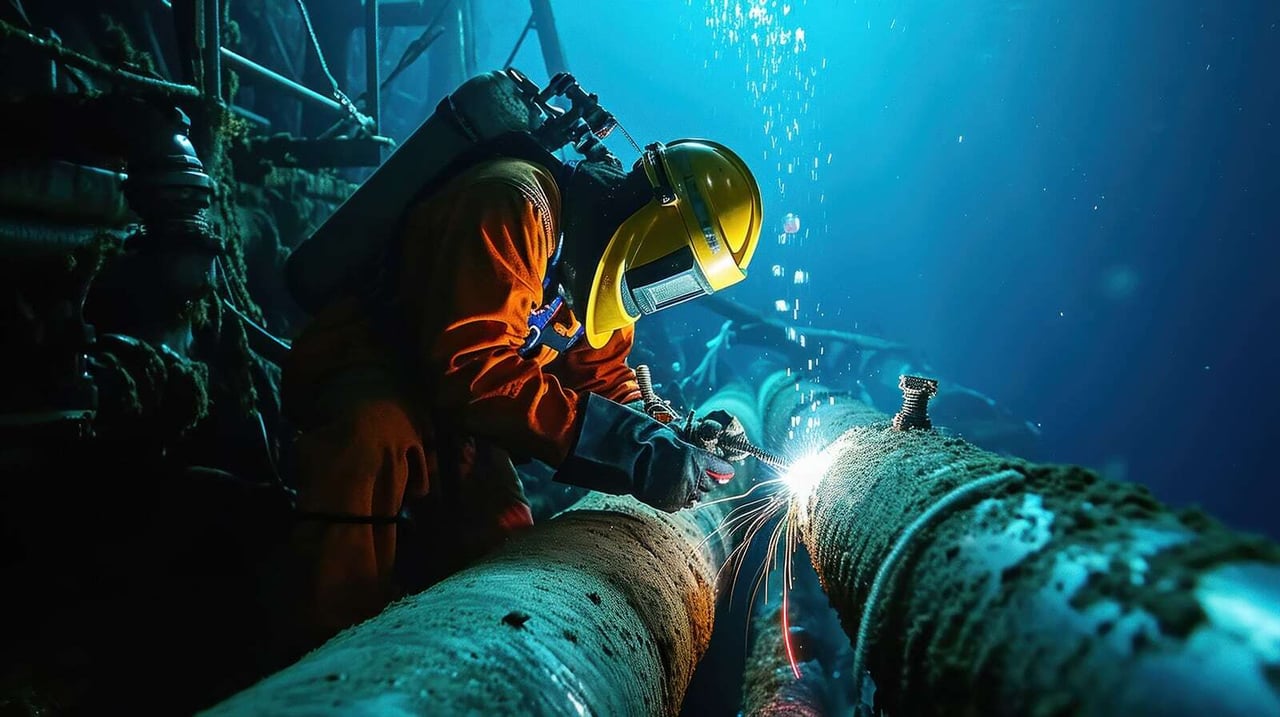
You are three welding videos deep on your phone at 11 p.m. A diver in a helmet is laying a bead on a pipeline 60 feet down, and the caption says he clears $300,000 a year. The comments are full of people swearing that underwater welders die at a rate of 15%, that the money is that good because the job is that deadly, and that most of them never see 40. You are a welder, or you want to be, and you are doing the math on whether this is your move.
Here is what that comment section will not tell you: about half of what you just read is wrong. The job is genuinely dangerous. It is also genuinely misunderstood, hyped by viral clips and repeated by websites that profit when you believe the scariest version. So let us do something different. Let us walk through what actually makes underwater welding dangerous, what the real numbers say, and why only a small, specialized group of welders (including a few working right here in Utah) ever do this for a living.
What underwater welding actually is
Underwater welding is exactly what it sounds like: joining or repairing metal beneath the surface of the water. It is a specialized subset of commercial diving, and it comes in two main forms.
Wet welding happens directly in the water. The welder and the electrode are both submerged, and the arc burns inside a bubble of its own gas. It is faster and cheaper to set up, so it gets used for repairs on ship hulls, pipelines, offshore platforms, and inland infrastructure. It is also the more dangerous of the two.
Dry welding, also called hyperbaric welding, happens inside a sealed chamber built around the weld site. Crews pump the water out, fill the space with a gas mixture, and the welder works in a dry, pressurized pocket. The welds come out higher quality and the environment is more controlled, but the setup is expensive and slow, so it is reserved for critical work.
Either way, the welder is a commercial diver first and a welder second. That order matters. You can teach a good diver to weld. Teaching a good welder to survive underwater is the harder problem. If you are still getting comfortable with the trade itself, it is worth learning the fundamentals of welding on dry land before you ever think about a dive helmet.
Why is underwater welding so dangerous? The real hazards
Underwater welding is dangerous because it stacks three things that are each hazardous on their own: electricity, water, and pressure. Combine them, and a small mistake that would be a bad day on dry land becomes life-threatening. Here are the specific risks.
- Electric shock. Water conducts electricity. Welders use live current in an environment where a cracked cable, worn insulation, or a bad ground can send that current where it should not go. Electric shock is the rarest of the serious hazards, and often the most lethal.
- Gas-pocket explosions. The heat of the arc splits water into hydrogen and oxygen. Those gases collect in pockets around the weld and in confined spaces. Hydrogen is highly explosive, and a spark in the wrong pocket can produce a blast. Underwater, pressure waves travel farther and hit harder than they do in air.
- Drowning and equipment failure. A diver's air supply, hoses, and life-support gear are the only things keeping them alive. A snagged line, a failed regulator, or a loss of air becomes an emergency fast. Cold water, strong currents, and near-zero visibility make every problem worse.
- Decompression sickness. When a diver spends time at depth, gases dissolve into the blood. Surface too quickly, and those gases form bubbles inside the body. "The bends" can cause intense pain, paralysis, or death, and the symptoms may not appear until hours after the dive.
- Differential pressure (delta-P). This is the one outsiders never think about. Water moving through an intake, a valve, or a pipe can create suction strong enough to pin a diver in place or pull them into an opening. It is silent, invisible, and one of the most feared hazards in the trade.
- Hypothermia. Long stretches in cold water lower body temperature, which dulls judgment and slows reactions right when a diver needs them most.
None of these are exotic. They are the everyday conditions of the job, which is why training and safety culture matter more here than in almost any other trade.
The truth about the "15% death rate"
If you have researched this job at all, you have seen the number: underwater welders die at a rate of 15%. It gets repeated on law-firm blogs, in video captions, and in half the articles that come up when you search. It is worth knowing where that figure comes from, because the honest answer is that nobody really knows.
The 15% number traces back to a small study from the 1970s, and it has been copied from one article to the next for decades without anyone rechecking it. The Bureau of Labor Statistics does not track underwater welders as their own category, so there is no clean, current, official fatality rate for this specific job.
What we do have is data on commercial diving as a whole. NIOSH, the CDC's occupational-safety institute, reported that the Bureau of Labor Statistics documented 39 fatal injuries and 460 nonfatal injuries and illnesses among commercial divers between 2011 and 2017, out of a workforce of roughly 3,380 divers. That works out to something like five to six deaths a year across the entire occupation. OSHA's older figures put diving-related deaths at up to 13 per year, and a CDC study covering 1989 to 1997 found a death rate for commercial divers roughly 40 times the all-industry national average.
So here is the honest picture. Underwater welding is not a coin flip where 15 out of every 100 workers die. But it is, by any measure, far more dangerous than typical industrial work. The risk is real. It is just not cartoonish, and you deserve accurate numbers before you bet a career on it.
The pay is real, but not the way the internet says
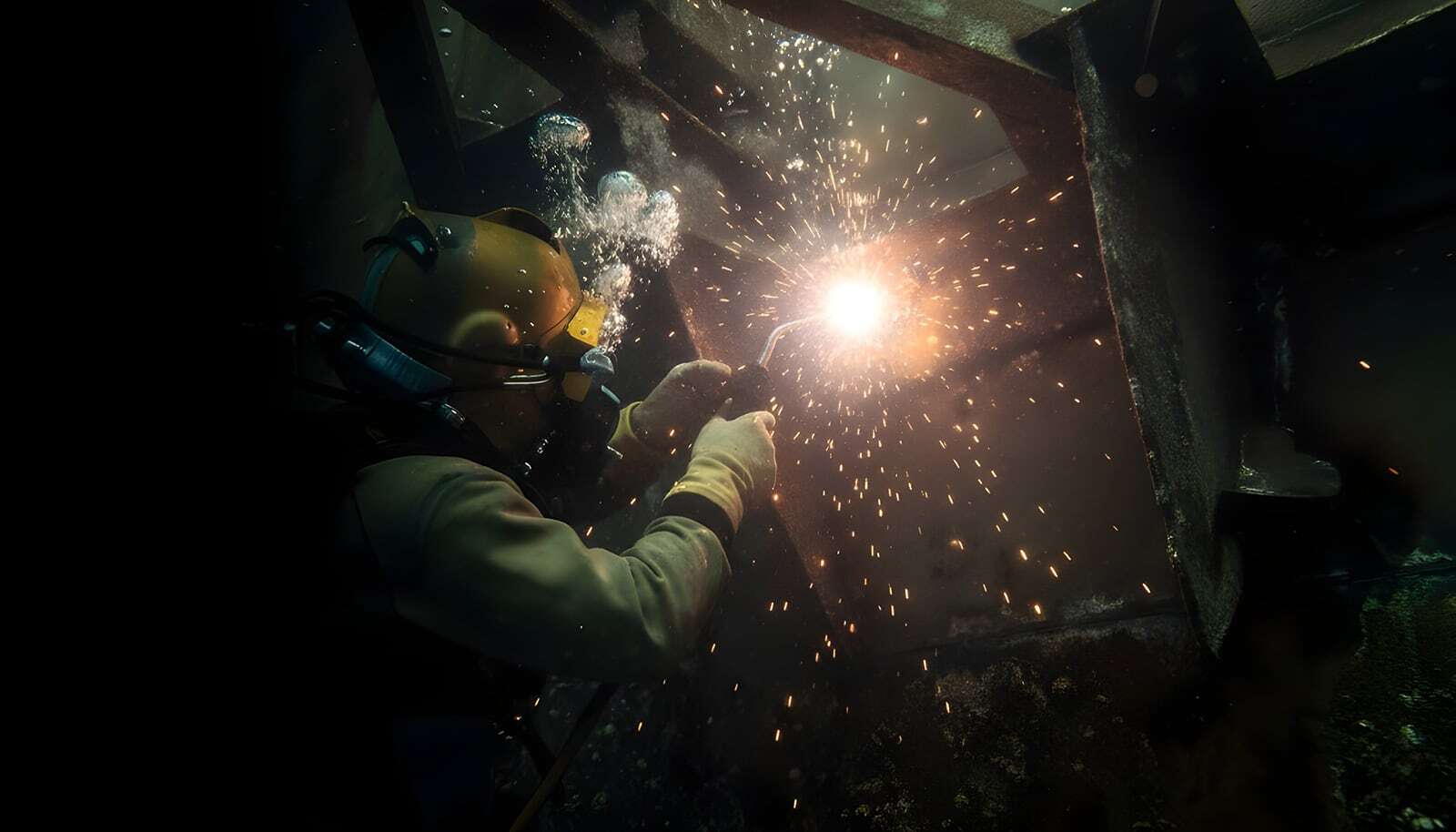
The other viral number is the salary: $300,000 a year to weld underwater. That figure is real for a very narrow slice of the field, and misleading for almost everyone else.
Search the American Welding Society's career resources and you get a very different starting point. Recent Lightcast data cited by AWS puts entry-level underwater welding pay around $62,000, the national median around $68,000, and experienced divers at $100,000 and up. The $300,000 headline exists, but it belongs to saturation divers doing deep, offshore, mixed-gas work in oil and gas, often overseas, for weeks at a stretch, in the most dangerous conditions the job offers. Most underwater welders never qualify for that work and never earn that number.
That is not a knock on the trade. A welder earning $68,000 doing inland inspection and repair has a solid, skilled career. But if you are chasing this path because a video promised you $300,000, you are choosing it based on the exception, not the rule. For comparison, it helps to know how much welders actually make in steady, land-based work before you weigh the trade-off.
What it takes to become an underwater welder
Nobody hands you a torch and drops you off a boat. The path into underwater welding runs through commercial diving first.
You start with commercial diving certification from an accredited school, where you learn to manage air supply, decompression, differential pressure, and the physical realities of working at depth. That training alone usually takes several months and costs real money. After that comes welding certification, and then specialized underwater welding instruction that combines the two skill sets. Programs certified through the American Welding Society teach you to produce sound welds in conditions that fight you the whole time.
Add it up, and most people spend somewhere between six and 18 months getting qualified, and then several more years gaining the experience to work safely in demanding conditions. The welders who last are the ones who treat safety as the job, not as paperwork that slows the job down. If you are already certified on land, you have a head start on half the equation. The diving half is the part that will test whether this trade is really for you.
The Utah connection: inland underwater welding
When most people picture underwater welding, they picture an offshore oil rig in the Gulf of Mexico. That is one version of the job. It is not the version most Utah welders will ever encounter.
Utah is landlocked, but it is not waterless. The state runs on reservoirs, dams, hydroelectric facilities, water-treatment plants, and thousands of miles of pipe, and all of that infrastructure sits underwater and needs inspection, cleaning, and repair. That is inland commercial diving, and it is a real trade in the Intermountain West. Potable Divers, a commercial diving outfit based in eastern Utah, does exactly this kind of work: underwater welding, burning, construction, and dam rehabilitation across the western states, often inside potable water tanks and reservoirs that stay in service while the divers work.
Inland work carries its own hazards. Confined spaces, low visibility, high altitude, cold water, and differential pressure around intakes and valves are all part of it. The work is quieter than offshore oil and gas, and far less hyped, but it is where a Utah-based welder-diver is most likely to build a career close to home.
So, is underwater welding worth it?
Here is the straight answer: underwater welding is worth it for a specific kind of person, and a bad idea for everyone else.
It is worth it if you are genuinely comfortable in the water, calm under pressure, disciplined about safety, and drawn to skilled, physical, high-consequence work. It is not worth it if the only thing pulling you in is a viral salary number, because that number is not the job most people get.
Most welders are better served building a strong, well-paid career on land, in trades that are in high demand and far less likely to hurt them. Utah has no shortage of that work. Manufacturing, fabrication, construction, and industrial employers across the Salt Lake Valley, Utah County, and Davis and Weber counties are hiring skilled welders and trades workers right now, with benefits and stability that most underwater welders would envy. That is the part a viral video will never show you. A good welding career does not have to be dangerous to be worth having.
That is what we do at LG Resources. Over the past decade we have placed more than 20,000 workers across Utah's key industries, and we fill about 250 positions a week from three offices in Salt Lake, Provo, and Roy. We do not staff commercial dive teams. We do connect welders and skilled-trades workers with employers who value skilled welders, offer day-one benefits, and keep a real path forward. If underwater welding is a dream, chase it with clear eyes. If a strong welding career closer to home sounds better, we can help with that today. Start by seeing welding and skilled-trades jobs near you.
Frequently asked questions
Is underwater welding really the most dangerous job in America?
It is among the most dangerous, but the honest answer is more complicated than the viral rankings suggest. Because the Bureau of Labor Statistics does not track underwater welders as a separate category, there is no single official number that crowns it the deadliest job. What is clear is that commercial diving overall carries a fatality rate many times the national average, and underwater welding sits at the higher-risk end of that trade.
What is the real death rate for underwater welders?
Nobody has a precise, current figure, and the widely quoted 15% traces back to a small 1970s study. For commercial diving as a whole, NIOSH and BLS data from 2011 to 2017 show 39 fatal injuries among roughly 3,380 divers, which is about five to six deaths per year across the occupation. That is far higher than typical industrial work, but nowhere near a 15% chance of dying.
How much do underwater welders actually make?
The American Welding Society, citing recent Lightcast data, puts entry-level pay around $62,000, the national median around $68,000, and experienced divers at $100,000 and up. The $300,000 salaries you see online apply only to deep offshore saturation divers doing the most extreme work, usually in oil and gas overseas. Most underwater welders never reach that tier.
What is the most common cause of death in underwater welding?
CDC and OSHA data point to drowning and decompression sickness as the leading causes among commercial divers. Electric shock and gas-pocket explosions are dramatic and lethal but comparatively rare. Many deaths categorized as drowning actually begin with an equipment failure, a differential-pressure incident, or a medical emergency at depth.
How long does it take to become an underwater welder?
Most people spend roughly six to 18 months getting qualified, which includes commercial diving certification, welding certification, and specialized underwater welding training. Becoming genuinely safe and employable in demanding conditions usually takes several additional years of supervised experience.
Can you do underwater welding in Utah?
Yes, though it looks different from offshore work. Utah's underwater welding happens inland, on reservoirs, dams, hydroelectric facilities, and potable water tanks. Companies such as Potable Divers, based in eastern Utah, perform underwater welding, burning, and dam rehabilitation across the western states. It is a niche trade, but a real one for welders who also train as commercial divers.
Is underwater welding worth the risk?
It depends entirely on you. If you are comfortable in the water, disciplined about safety, and drawn to high-consequence skilled work, it can be a rewarding career. If you are mainly chasing a viral salary figure, the risk almost certainly outweighs the reward, and a strong land-based welding career will serve you better.
Talk to a recruiter about welding and skilled-trades work in Utah.
If you are weighing your next move as a welder, it helps to talk to people who place welders and skilled-trades workers every week and know which Utah employers actually value the work. Reach out to an LG Resources recruiter and let us help you find steady, well-paid work close to home.
Warehouse worker pay in Utah: Your 2026 Salary Guide
You have 11 tabs open and every one of them says something different.
Why is underwater welding so dangerous?
You are three welding videos deep on your phone at 11 p.m. A diver in a helmet is laying a bead on a pipeline 60 feet down, and the caption says he clears $300,000 a year. The comments...

How to Succeed at Getting Your First Clerical Job
Are you organized, detail-oriented, and comfortable using computers? If so, a clerical job could be the perfect way to start your office career.